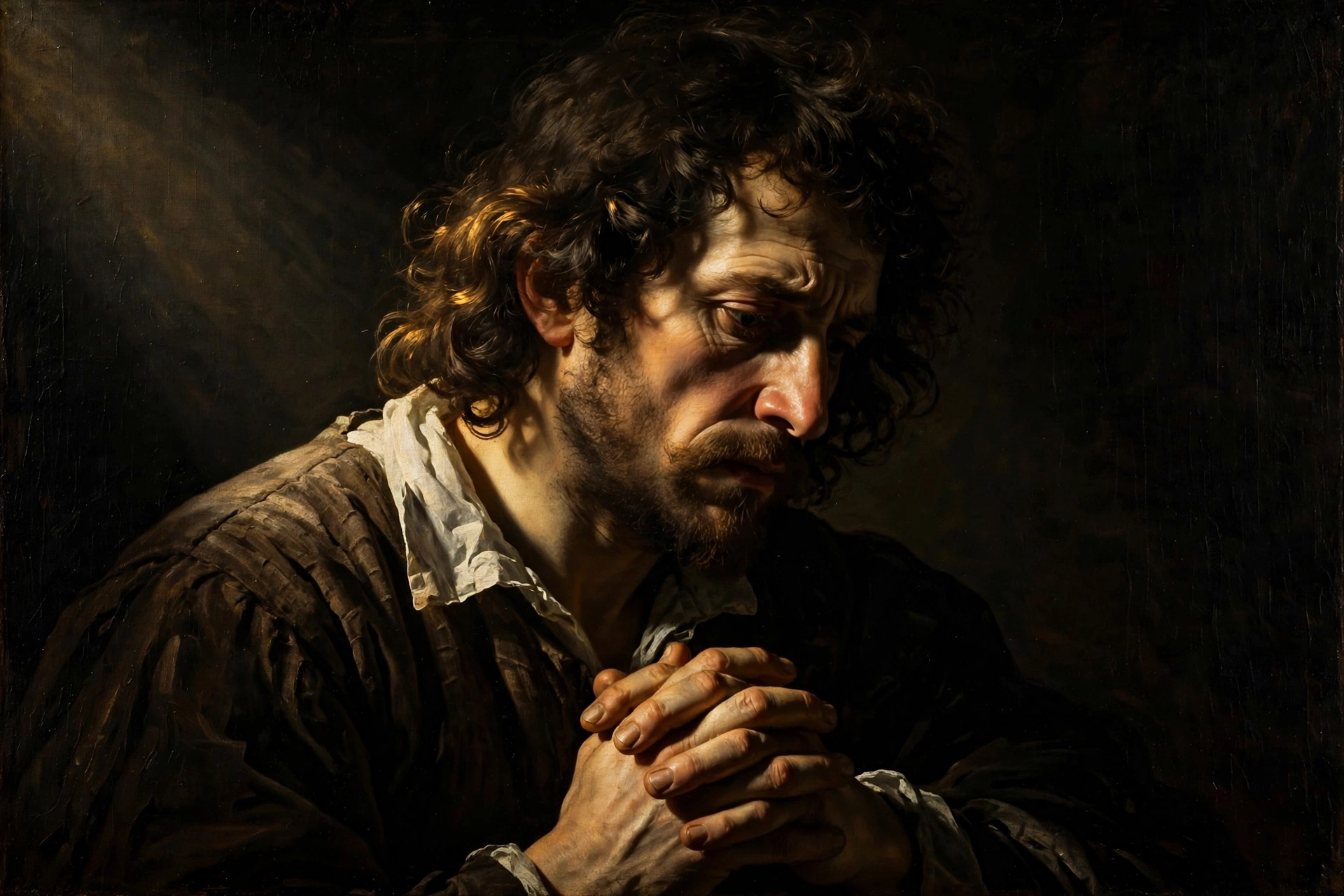
Few techniques in art history are as instantly recognizable — or as dramatic — as chiaroscuro. From the Italian chiaro (light) and oscuro (dark), the term describes the bold contrast between illumination and shadow used to model three-dimensional form. This guide explains what the chiaroscuro technique is, where it came from, how two Baroque masters made it legendary, and how you can practice it in your own work today.
The Origins of Chiaroscuro
Artists have shaded forms since antiquity, but chiaroscuro as a deliberate, dramatic system emerged during the Renaissance. Leonardo da Vinci explored subtle gradations of light and dark to give his figures sculptural volume, and his followers pushed the contrast further. By the late 1500s, painters across Italy were using strong light-dark modeling not only to describe form but to heighten emotion. The stage was set for the Baroque era, in which chiaroscuro would become the defining visual language of a generation.
Caravaggio: Drama in Darkness
No name is more closely tied to the chiaroscuro technique than Michelangelo Merisi da Caravaggio. Working in Rome around 1600, Caravaggio painted saints and sinners emerging from near-total darkness, struck by a single raking beam of light as if from a hidden window. In The Calling of Saint Matthew, light does not merely illuminate — it narrates, selecting the instant of spiritual awakening from the gloom of a tavern. Caravaggio’s extreme version of the technique, often called tenebrism (from the Italian tenebroso, “dark, gloomy”), shocked his contemporaries and influenced painters across Europe, from Ribera in Spain to the Utrecht Caravaggisti in Holland.
Rembrandt: Light as Emotion
Half a century later in Amsterdam, Rembrandt van Rijn made chiaroscuro intimate rather than theatrical. His portraits and biblical scenes glow from within: a face half-lost in shadow, a hand catching warm light, backgrounds dissolving into golden-brown darkness. Rembrandt built his lights with thick, textured impasto and let his darks sink into transparent, layered umbers. Where Caravaggio used contrast for shock, Rembrandt used it for psychology — his light reveals character, age, doubt, and tenderness. The “Rembrandt lighting” pattern still taught in photography studios today, with its small triangle of light on the shadowed cheek, descends directly from his paintings.
Chiaroscuro vs. Sfumato: A Quick Distinction
Beginners sometimes confuse chiaroscuro with sfumato, another Italian term popularized by Leonardo. The difference lies in the edges: sfumato softens transitions until light melts imperceptibly into shadow — think of the Mona Lisa’s smile — while chiaroscuro emphasizes the contrast between the two. Many great paintings use both: soft modeling within forms, dramatic contrast between them.
How to Practice Chiaroscuro Today
You do not need a Baroque studio to learn this technique. These exercises work as well in a modern apartment as they did in a 17th-century workshop:
- The single-lamp still life. Place a white sphere or an egg on a dark cloth in a darkened room, lit by one desk lamp from the side. Draw or paint exactly what you see, mapping five values: highlight, light, halftone, core shadow, and reflected light.
- Value studies first. Before touching color, make small monochrome studies in charcoal or burnt umber. If the values work in grayscale, they will work in color.
- Squint constantly. Squinting merges details and reveals the big light-dark pattern — the underlying structure that gives chiaroscuro its power.
- Limit your palette. Try a study in titanium white, ivory black, and raw umber only. Restriction forces you to think in values rather than hues.
- Copy the masters. Copying even a small detail from a Caravaggio or Rembrandt teaches you more about their logic of light than any amount of reading.
Why Chiaroscuro Still Matters
Four centuries after Caravaggio, the chiaroscuro technique is everywhere: in cinema lighting, in portrait photography, in video game concept art. Its power is simple and deeply human — we are wired to look toward the light. Whether you paint, draw, or photograph, learning to orchestrate light and shadow deliberately will turn flat images into vivid, dimensional ones. Set up a single lamp, find your darkness, and let the light do the talking.
To train your eye further, spend time with the originals whenever you can. Standing before a real Caravaggio in a museum, you notice things no reproduction shows: the way the lit edge of a sleeve seems to vibrate against the dark, or how Rembrandt’s shadows are never truly black but full of warm, breathing color. Photographs flatten these subtleties. Whenever travel or a local gallery gives you the chance, let the old masters teach you in person.